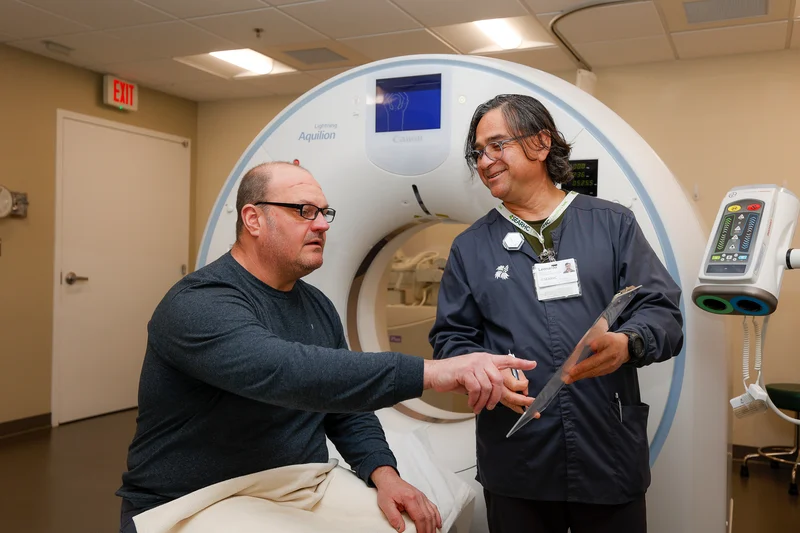
At our clinics in Juneau and Sitka, SEARHC’s urology team provides evaluation and treatment for conditions affecting the urinary tract in both men and women, as well as the male reproductive system. We offer routine urologic care, including diagnosis, in-clinic procedures, and ongoing management for a wide range of conditions.
For women, care is coordinated closely with OB/GYN and Urogynecology services to ensure comprehensive evaluation of pelvic and bladder concerns.
When advanced or specialized care is needed, our team works closely with trusted partners to coordinate referrals and support continuity of care.
A comprehensive evaluation helps us better understand what’s contributing to your symptoms. Your provider will review your medical history, discuss your concerns, and may recommend additional testing to help guide diagnosis and treatment.
Available in Juneau and Sitka, cystoscopy is a minimally invasive procedure that uses a small camera to examine the inside of the bladder and urethra. It may be recommended to evaluate symptoms such as blood in the urine and recurrent urinary tract infections.
When changes in prostate health require further evaluation, a prostate biopsy may be recommended, available in Juneau and Sitka. During this procedure, small tissue samples are collected and analyzed to help identify the cause of abnormal findings and determine appropriate next steps for care.
Diagnostic testing may be recommended to help identify the cause of urinary symptoms and support treatment planning. Our team coordinates imaging studies, laboratory testing, and other diagnostic services as needed.
Many urologic conditions can be managed through ongoing monitoring, medication, and follow-up care. We work with patients to track symptoms, evaluate treatment effectiveness, and make adjustments as needed over time.
Some patients may benefit from additional services beyond routine urologic care. For women with more complex pelvic health concerns, we work closely with OB/GYN and Urogynecology providers. Pelvic floor physical therapy may also be recommended for both men and women to help improve bladder control, muscle strength, and symptom management.
Changes in urination can have many causes, and not all are cause for concern. We evaluate symptoms such as frequent urination, urinary urgency, difficulty starting or stopping urination, weak urine flow, and the feeling that the bladder is not fully emptying.
Also known as enlarged prostate, a common condition as men age. It can affect urinary flow and may cause symptoms such as frequent urination, difficulty emptying the bladder, weak urine stream, or waking up multiple times during the night to urinate.
Blood in the urine is not always visible and can occur for a variety of reasons, including infections, kidney stones, or other urinary tract conditions. Because it can sometimes be a sign of a more serious underlying issue, it should always be evaluated by a healthcare provider.
Often causing sudden and severe pain, kidney stones are a common urologic condition with symptoms that may include blood in the urine, nausea, and urinary obstruction. We provide evaluation and treatment to help patients find relief and prevent complications.
Frequent UTIs can be frustrating, uncomfortable, and disruptive to daily life. When infections continue to return, there may be an underlying issue affecting the urinary tract. Our team helps identify potential causes and develop treatment plans.
Symptoms can range from mild irritation to ongoing concerns that affect daily activities. Our providers help identify the cause of symptoms and recommend treatment options tailored to your needs.
Changes in urinary function, prostate-related symptoms, and other concerns affecting the male reproductive system can become more common with age. Our team provides evaluation and treatment for a range of men's urologic conditions, helping patients better understand their symptoms and treatment options.
Bladder concerns, urinary incontinence, and pelvic floor symptoms are common and often treatable. We provide comprehensive evaluation and coordinate care with OB/GYN and Urogynecology providers when appropriate.