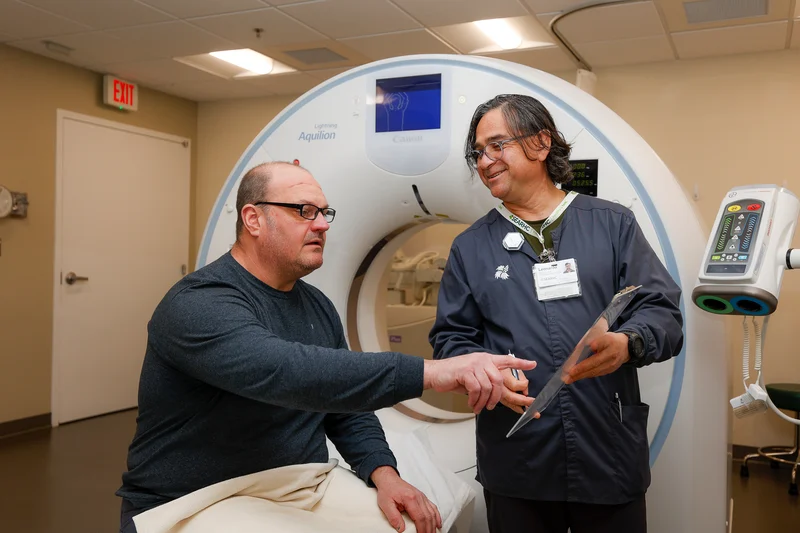
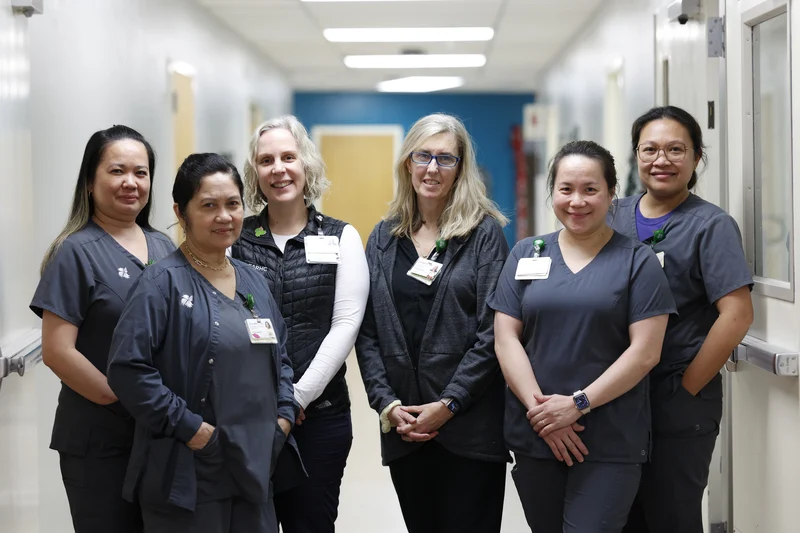
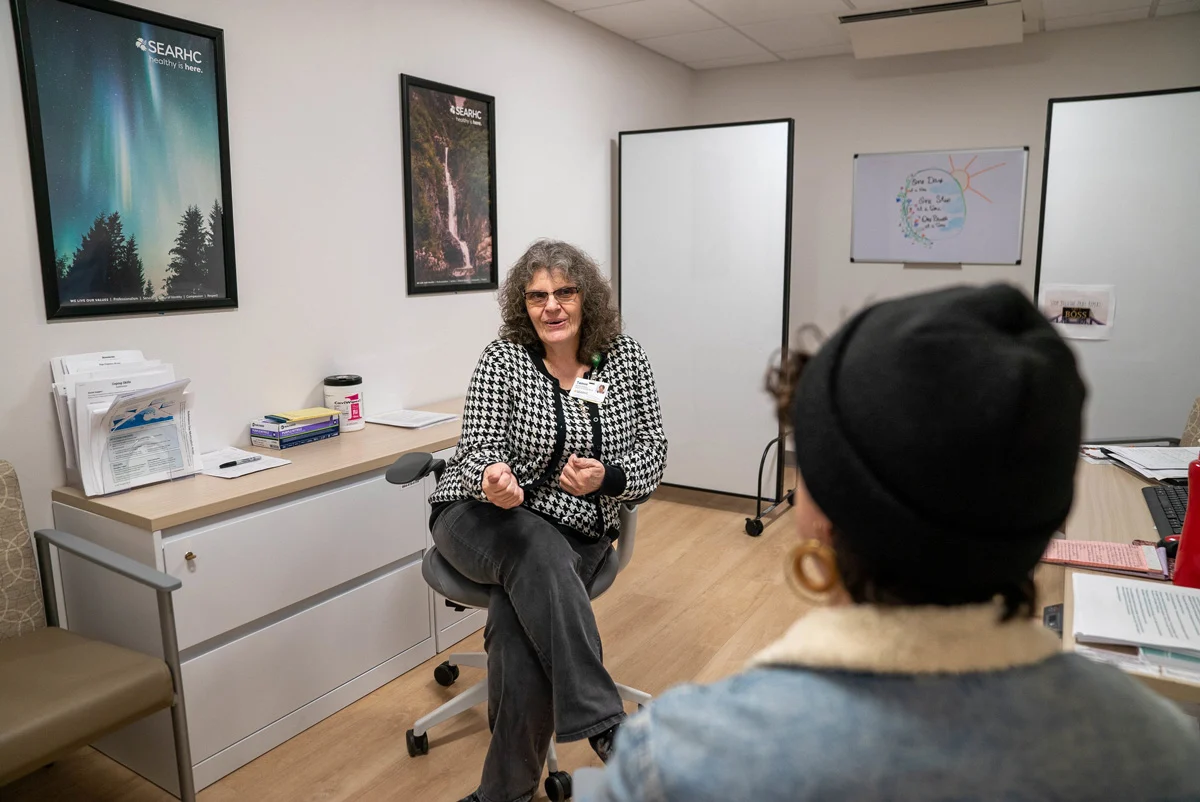
We perform full assessments and develop a personalized treatment plan addressing sensory aspects with medication, provide pain neuroscience education for patients to better understand how pain works, and support patients through multiple visits that guide progress and readiness for change.
Treatment plans are tailored to each patient’s condition and needs. Our rehabilitation team helps improve sensory function through movement and muscle training and reinforce cognitive strategies like pain education and activity planning.
Our Behavioral Health team works closely with the pain management team addressing cognitive and emotional factors through evident based therapies like Cognitive Behavioral Therapy (CBT), Pain Processing Therapy (PRT) and Trauma-focused care and other modalities.
We provide long-term support to improve quality of life, give hope, and empower patients with their health and healing. Our team works collaboratively to reduce anxiety and depression linked to chronic pain, increase activity and independence, and achieve meaningful pain reduction.
Patients working with our interdisciplinary pain team are actively involved in their care and are supported through education, movement, and coping strategies that lead to better function and quality of life, and maximum pain reduction.
Celiac plexus pain
Cervical facet pain
Chronic joint pain (knee, hip, shoulder, ankle)
Chronic ligament or tendon pain (tendonitis, bursitis)
Chronic migraines
Chronic pelvic pain
Complex Regional Pain Syndrome (CRPS)
Degenerative disc disease
Diabetic neuropathy
Facet joint pain
Failed back surgery syndrome
Fibromyalgia
Herniated discs
Hip pain
Knee pain
Ligament laxity and joint instability
Low back pain and sacroiliac joint dysfunction
Lumbar, thoracic, and cervical pain (facet joint arthritis, degenerative disc disease)
Myofascial pain syndrome
Occipital neuralgia
Osteoarthritis
Peripheral nerve entrapment syndromes
Post-herpetic neuralgia
Radiculopathy (nerve root irritation causing arm/leg pain)
Sacroiliac joint dysfunction
Shoulder pain (rotator cuff tendinopathy, adhesive capsulitis)
Spinal stenosis
Sports injuries (sprains, chronic soft-tissue injuries)
Tendinopathy (rotator cuff, Achilles, patellar tendon)
Tension headaches
TMJ pain
Visceral pain syndromes
Epidural steroid injections, facet joint injections, sacroiliac joint injections, peripheral nerve blocks, trigger point injections
for facet and genicular nerves
Often used for patients suffering with migraines
Focuses on soft tissue, muscle energy, articulation, and spinal manipulation
Patients learn that chronic pain often stems from the train and explain the concept of neuroplastic pain and how retraining works.
Patients are taught to observe pain sensations with curiosity and calm attention while reinforcing that these sensations are safe – reducing fear and threat response.
Patients learn to reframe pain signals as non-dangerous “false alarms” and use cognitive techniques to challenge catastrophic thoughts.
Patients address stress, anxiety, and unresolved emotions that increase pain responses and use mindfulness and acceptance strategies when approaching their pain and symptoms.
Providers help patients incorporate gradual exposure to movements and activities previously avoided due to pain and reinforce positive experiences that retrain the brain’s pain pathways.
PRT care focuses on different formats to meet patients’ needs, including travel or location limitations. PRT can be conducted in individual sessions, both in person and virtual, as well as group virtual sessions.
Individual sessions are held in-person or virtually in 8 sessions over the course of 4 weeks. Each session lasts 45-60 minutes depending on patient needs and care plan.
Group sessions are held virtually over the course of 10-12 weeks. Each session lasts 60-90 minutes.
Patients learn about the link between thoughts, emotions, and behavior to be able to explain negative thought patterns that contribute to distress and symptoms.
Providers help patients identify unhelpful or distorted thoughts and challenges and replace them with balanced, realistic thoughts.
Providers encourage engagement in positive activities and use graded exposure for anxiety and/or pain-related fear.
Patients are taught coping strategies, problem-solving, and relaxation techniques like practicing mindfulness and stress management.
Patients are active participants in their treatment and healing. By using journaling or behavioral experiments, patients see progress and reinforced skills learned in session through real-life application.
CBT care focuses on different formats to meet patients’ needs, including travel or location limitations. CBT can be conducted in individual sessions, both in person and virtual, as well as group virtual sessions.
CBT appointments are provided in an individual or group setting lasting 45-60 minutes per session. Depending on the patient’s conditions and goals, the treatment plan includes 6-20 sessions. Your provider will work closely with you and your care team to determine the setting and treatment plan.
Our providers and teams coordinate with patients to provide the best access to treatment both virtually and in-person as well as individual or group sessions.
Regular follow-up ensures symptoms are monitored and tracked as well as patient progress.
Collaborating closely with our rehabilitation, behavioral health and pain management teams providing a comprehensive treatment plan.
Referrals are required for pain management care. To get started,
Our team is ready to guide you toward improved joint health and help you reduce pain, improve mobility, and maintain a better quality of life.