Sarah Scheiner is ‘doing the good work’
The 2026 DAISY Award recipient reflects on patient advocacy, defining moments and why nursing looks different in a community where everyone knows each other.
An elderly man arrived at the emergency department with chest pain. He was confused and terrified because of advanced dementia, his hands shaking from Parkinson’s disease. Even once the medical emergency was under control, his anxiety remained.
Later, the physician walked back into the room to find an entirely different patient. His tremors had settled. His fear had softened. He was sitting up in bed, smiling.
“The difference was Sarah,” said Tracy Merry, chief nursing officer for SEARHC Wrangell Medical Center.
A case manager, registered nurse and 2026 DAISY Award recipient, Sarah Scheiner had spent time at his bedside — listening, offering reassurance and bringing his family together. A conversation about end-of-life planning became one marked by comfort, dignity and understanding.
Sarah has a phrase for what transformed the hospital room that day: ‘doing the good work.’ She first heard this posed in the form of a rhetorical question from a social worker early in her career. It was a simple way of considering whether every decision put the patient first.
That moment was familiar territory for Sarah. Before joining SEARHC, she spent years working in hospice and end-of-life care, where she helped patients and families navigate some of life’s most difficult decisions. She loved working with seniors and now brings that same capacity and compassion to the emergency department and inpatient units.
With “doing the good work” as her guiding principle, she makes sure that those she cares for never lose their voice. Sarah never rushes conversations about challenging medical decisions or answers to complex questions. She pays attention to what matters most to each person before helping them move forward. She even spends hours on the phone with insurance companies and financial assistance programs to help lessen financial barriers.
“We often only have one chance to get this right,” Sarah said. “Sometimes taking that extra time to sit down and just listen is what patients need most.”
To Sarah, that sense of responsibility is deeply personal. Long before she became a nurse, she learned that there can be ‘good’ deaths and ‘bad’ deaths. They each have the same outcome, but are profoundly different experiences for patients and their loved ones.
Both of Sarah’s grandmothers lived with dementia, eventually sharing a room in the same memory care unit.
The first of her grandmothers passed without hospice care, under circumstances Sarah described as painful and overwhelming. When her second grandmother reached the end of her life, hospice was part of the journey. Witnessing that process transformed Sarah’s understanding of what it means to guide someone through their final days. “That hospice nurse was like this hero in my mind,” she said.
Born in Sitka, Sarah and her family lived in Northern California before returning to Alaska for a slower pace of life. In a rural community like Wrangell, where only about 2,000 people call home, healthcare is deeply personal. Her patients are often neighbors, friends, and familiar faces, and caring for them means caring for the people who love them, too.
And, in Southeast Alaska, relationships are only part of the equation. Sarah believes medicine is most effective when it honors each person’s culture and values. Many of her patients are Alaska Native, and community plays a central role in their decision-making. Sometimes that means making sure a loved one is part of an important conversation. Other times, it means offering a healing blanket, serving cultural foods or creating space for traditions that bring comfort during hard moments.
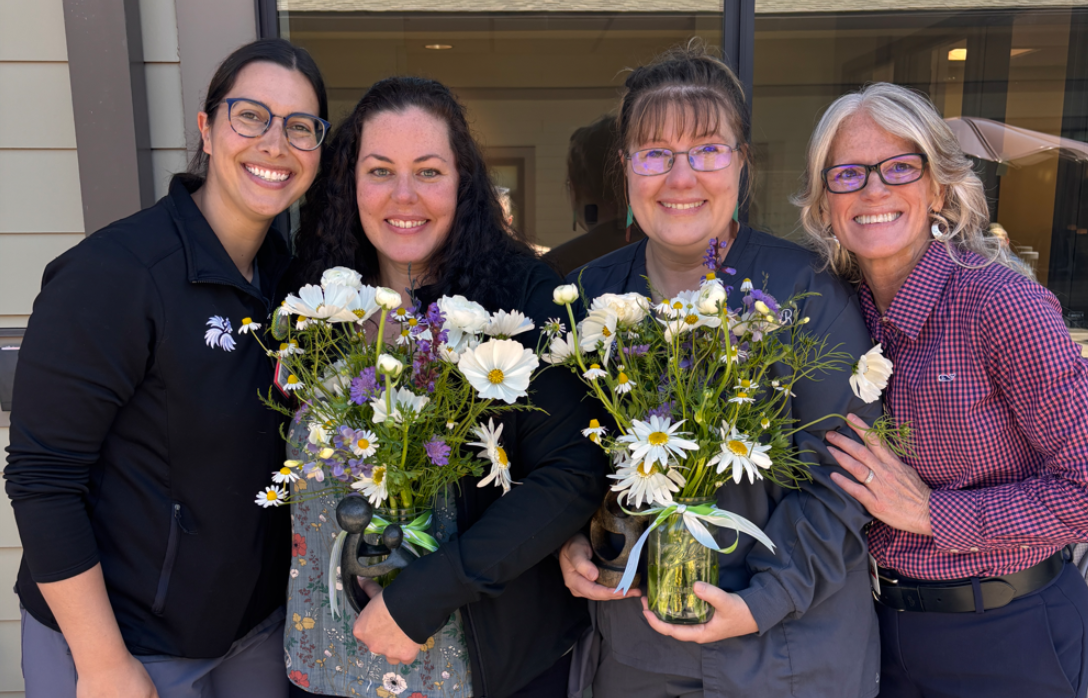
When asked about receiving the 2026 DAISY Award, Sarah returned to the moment she walked into the courtyard and saw her husband, parents and two sons waiting. She hadn’t expected the honor and was equally stunned that her sons had managed to keep it secret for three weeks. Having her family there made the recognition all the more meaningful.
Like every celebration, the flowers — daisies, of course — will wilt. The certificate will find its place on the wall. The trophy, a hand-carved stone sculpture called “The Healer’s Touch,” will live proudly on display. The surprise celebration in the courtyard will become a cherished memory.
What will remain is the question that she asks herself every day, “Are we doing the good work?”
For Sarah Scheiner, the answer is a resounding, “Yes!”